
Hybrid threats. Correlated losses. Limited spares.
Preserve recovery options.
HS2D is a retrofit-capable, transformer-specific fast-depressurization solution designed to help limit pressure escalation during applicable internal-arcing scenarios in oil-filled transformers.
Milliseconds
To Escalate
Years
To Replace
Recovery options
At Risk
THE CHALLENGE
Why Preserving Recovery Options Matters
Internal arcing can escalate within milliseconds, while replacing a critical transformer may take months or even years.
Preserving recovery options helps utilities maintain flexibility before replacement becomes the only path.
Milliseconds
Internal arcing events can rapidly generate pressure that may threaten the structural integrity of the transformer.
Months / Years
Replacing a critical transformer often requires engineering, procurement, manufacturing, transportation and commissioning.
- Internal Arcing
- Rapid Pressure Build-up
- Structural Damage Risk
- Inspection
- Repair
- Testing
- Return to Service
- Procurement
- Manufacturing
- Transportation
- Installation
- Commissioning
A resilient grid needs more than spare transformers. It needs options. HS2D preserves them.
The objective is not simply to replace transformers. It is to preserve the option to recover them.
U.S. POLICY CONTEXT
Transformer resilience is gaining national policy attention
In March 2026, H.R. 7977 was introduced in the U.S. House of Representatives. Section 303 proposes a Strategic Transformer Resilience Program addressing domestic manufacturing, strategically located critical equipment, transportation readiness, vulnerability reduction, testing, modular equipment designs and standardization. The proposal does not endorse any specific technology. It highlights a broader resilience need: expand future capacity, prepare replacement options and reduce the vulnerability of critical assets already in service.
BUILD CAPACITY
Domestic manufacturing
Expand manufacturing capacity for transformers and critical grid equipment to support long-term demand and supply-chain resilience.
PREPARE REPLACEMENT
Strategic equipment and transportation readiness
Position compatible equipment, maintain strategic spares and prepare the logistics required for timely grid restoration after major asset loss.
PRESERVE RECOVERY OPTIONS
Installed-asset consequence limitation
Apply project-specific measures that can help limit the consequences of applicable failure scenarios before replacement becomes the only path.
Within this broader resilience framework, HS2D contributes at the installed-asset level. It is engineered to help limit pressure escalation during applicable internal-arcing scenarios, preserving the opportunity for post-event inspection, technical assessment and repair when feasible.
Policy context: H.R. 7977, Section 303, was introduced in the U.S. House of Representatives on March 18, 2026. It has not been enacted. Reference to this proposal does not imply federal endorsement, funding eligibility, certification, regulatory approval or recommendation of HS2D.
DIFFERENT THREATS. ONE POTENTIAL RECOVERY CONSTRAINT.
Different initiating events can lead to severe damage to critical grid equipment. HS2D does not prevent the initiating threat. Its scope begins when an applicable event results in internal arcing and rapid pressure escalation within an oil-filled transformer.
Initiating event
Applicable internal arcing
Rapid pressure escalation
HS2D fast depressurization
Opportunity for inspection and technical assessment
THE SOLUTION
HS2D: Engineered to Preserve Recovery Options
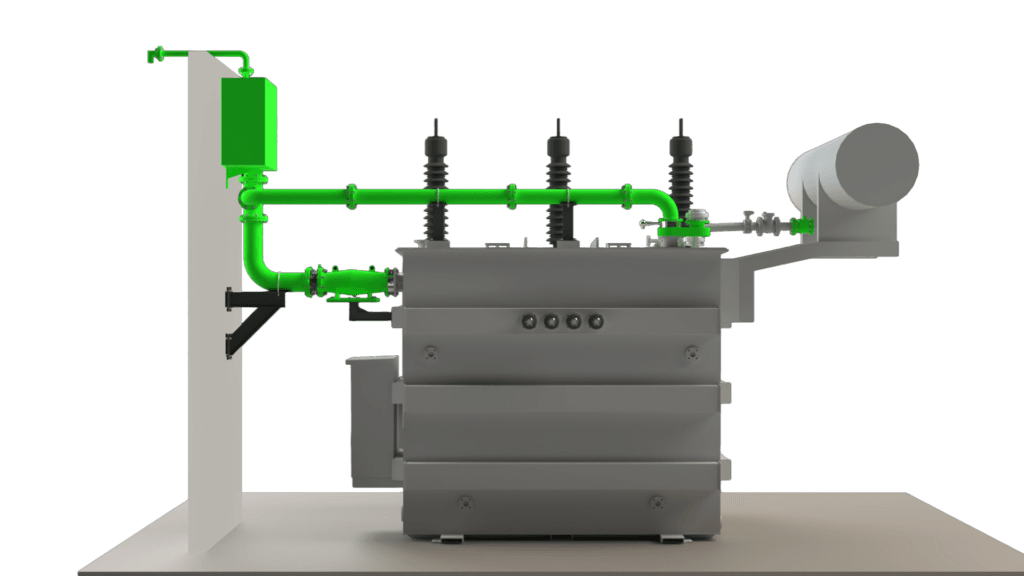
HS2D is a retrofit-capable, transformer-specific fast-depressurization solution designed to help limit pressure escalation during applicable internal-arcing scenarios in oil-filled transformers.
HS2D does not replace electrical protection, monitoring, fire protection or strategic spare programs. It adds a physical consequence-limitation layer designed to help preserve the opportunity for post-event inspection, technical assessment and repair when feasible.
ENGINEERED
Designed around the transformer, the site and the operating philosophy.
TESTED
Supported by component, subsystem and full-scale validation programs.
DEPLOYED
Built on operational experience from installed fast-depressurization systems.
RETROFIT-CAPABLE
Designed for existing and new oil-filled transformers, subject to project-specific engineering assessment.
ENGINEERING CONFIDENCE
Engineered. Tested. Deployed.
HS2D is supported by engineering analysis, testing and field experience from the underlying fast-depressurization technology platform. Each application remains subject to transformer- and site-specific engineering assessment.
The evidence base combines component and subsystem validation, full-scale test programs, CFD/FSI analysis, selected independent inspection and operational experience.
- Helps limit pressure escalation during applicable internal-arcing scenarios.
- Complements existing electrical protection, monitoring, fire protection and strategic spare programs.
- Applicable to new and retrofit installations, subject to project-specific engineering assessment.
- Transformer configuration and criticality.
- Site integration and operating philosophy.
- Applicable fault scenarios and engineering assumptions.
- Project-specific validation and commissioning requirements.
Engineered for the application.
Supported by evidence.
Validated project by project.
APPLICATIONS
Designed for Critical Transformer Applications
HS2D is designed for critical oil-filled transformers where loss of the asset would create significant operational, safety, environmental or replacement exposure. Applicability is assessed project by project.
Utilities & TSOs
Support grid reliability and service continuity across transmission and distribution networks.
Power Generation
Support the resilience of transformers serving continuous power generation and plant operation.
Industrial Facilities
Support consequence-limitation strategies for transformers serving mission-critical industrial processes.
Data Centers
Support power-infrastructure resilience for high-availability digital facilities.
EPCs & Engineering Consultants
Integrate transformer-specific physical consequence limitation into project and retrofit engineering.
Insurers & Risk Engineers
Support risk assessments with project-specific physical consequence-limitation engineering.
Engineered for utilities, industries and critical infrastructure where transformer availability and recoverability matter most.
Does HS2D protect against cyberattacks, physical attacks or severe weather?
No. HS2D does not prevent initiating threats. It is an asset-level physical consequence-limitation solution designed for applicable internal-arcing pressure scenarios in oil-filled transformers.
Does HS2D guarantee that a transformer will be repairable?
No. HS2D is designed to help preserve the opportunity for inspection and repair. Actual recoverability depends on fault location, arc energy, transformer condition, damage extent and post-event engineering assessment.
Does HS2D replace existing protection layers?
No. HS2D complements electrical protection, monitoring, fire protection, emergency-response planning and strategic spare programs.
Is HS2D endorsed or funded under H.R. 7977?
No. H.R. 7977 is proposed legislation and does not mention or endorse HS2D. It is referenced solely as public-policy context for the growing importance of transformer resilience.
NEXT STEP
Request an HS2D Engineering Review
Share the transformer configuration, application and operating context. Our engineering team will assess whether the asset should be reviewed for retrofit-capable physical consequence limitation and identify the information required for a project-specific assessment.
- Initial screening of the application and asset criticality.
- Review of the transformer configuration and operating context.
- Identification of the data required for engineering assessment.
- Preliminary discussion of retrofit feasibility and project-specific limitations.
- A clear recommendation for the next engineering step.
RESOURCES
H.R. 7977 - Section 303: Electricity Transformers
Official introduced text - U.S. Government Publishing Office
HS2D Engineering & Applicability Overview
Technical scope, evidence structure, application limits and engineering-review process.

Engineering Protection. Powering Trust.
Start with an engineering discussion to evaluate whether selected critical transformers should be reviewed for retrofit-capable physical consequence limitation.
