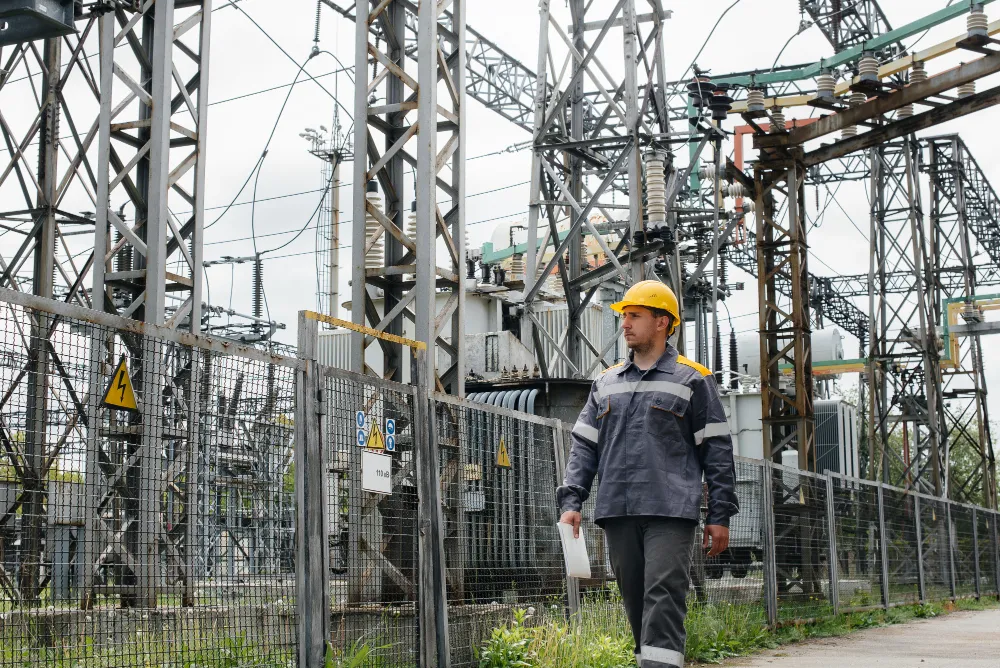

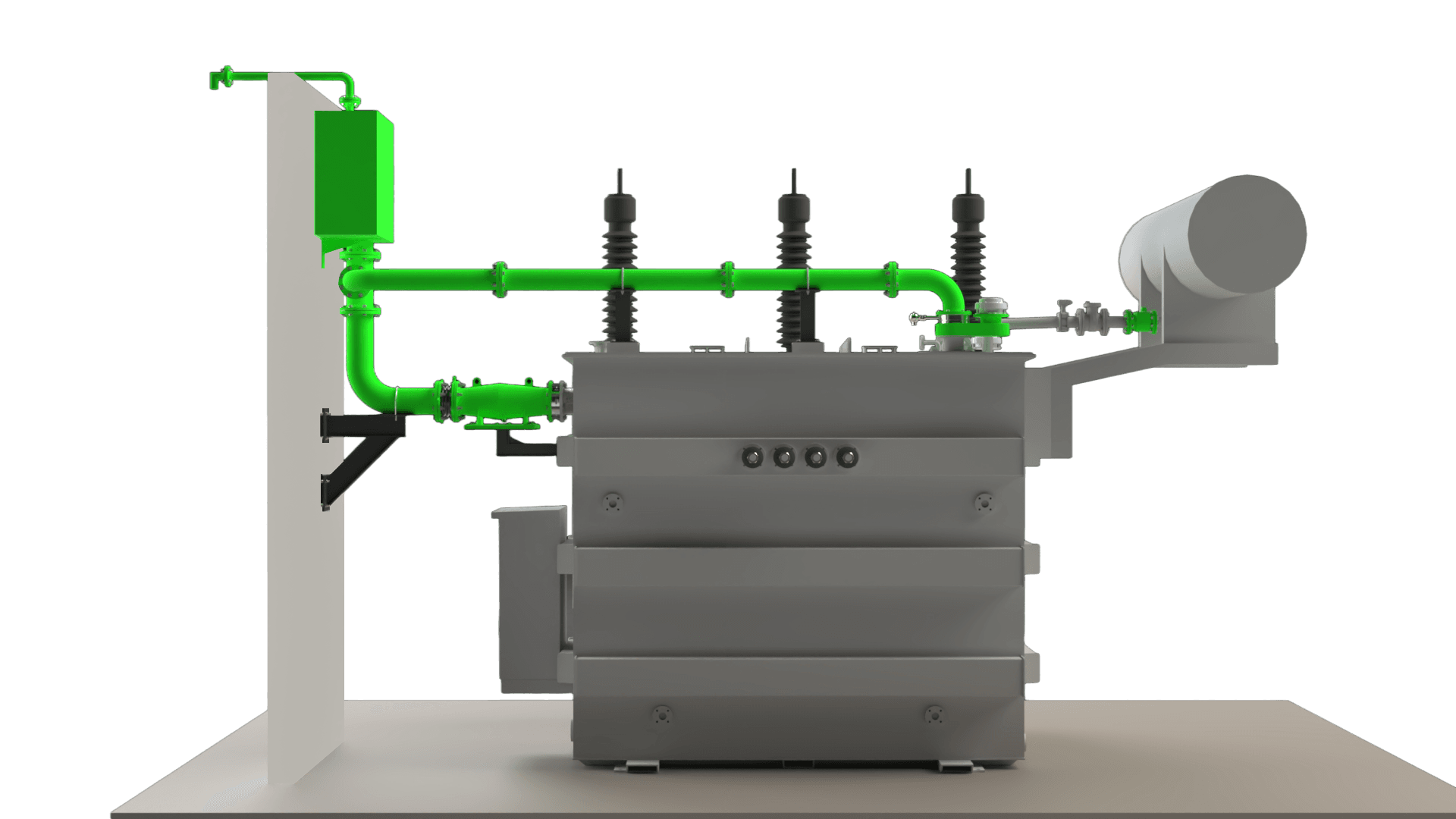
A modular mechanical explosion prevention system engineered to mitigate localized dynamic pressure escalation in transformer compartments
When HS2D Is Selected
HS2D is typically selected when:
- Compartment-specific structural exposure is identified
- Full-architecture deployment is not required
- Retrofit constraints limit full-system integration
- Localized escalation risk requires targeted mitigation
Engineering Purpose
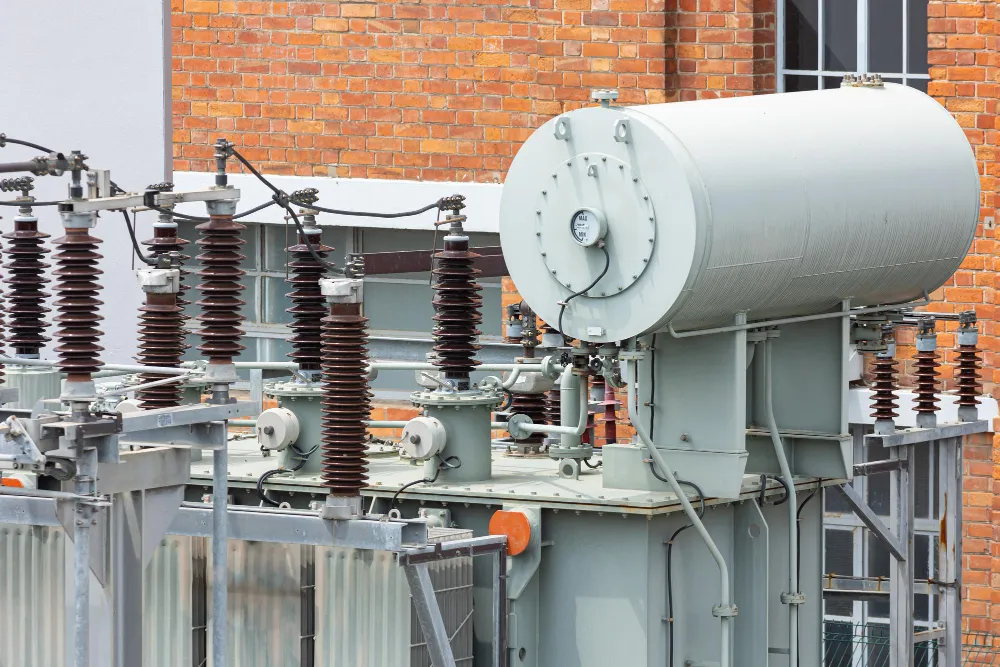
Targeted structural protection for auxiliary transformer volumes.
While main tank protection addresses large-volume pressure escalation, certain transformer configurations present localized structural exposure within:
- OLTC compartments
- Bushing turrets
- Connected oil-filled cavities
- Auxiliary enclosures
In high-energy internal fault scenarios, pressure can propagate into these volumes and generate localized structural stress.
HS2D is engineered to mitigate such localized escalation.
How HS2D Works
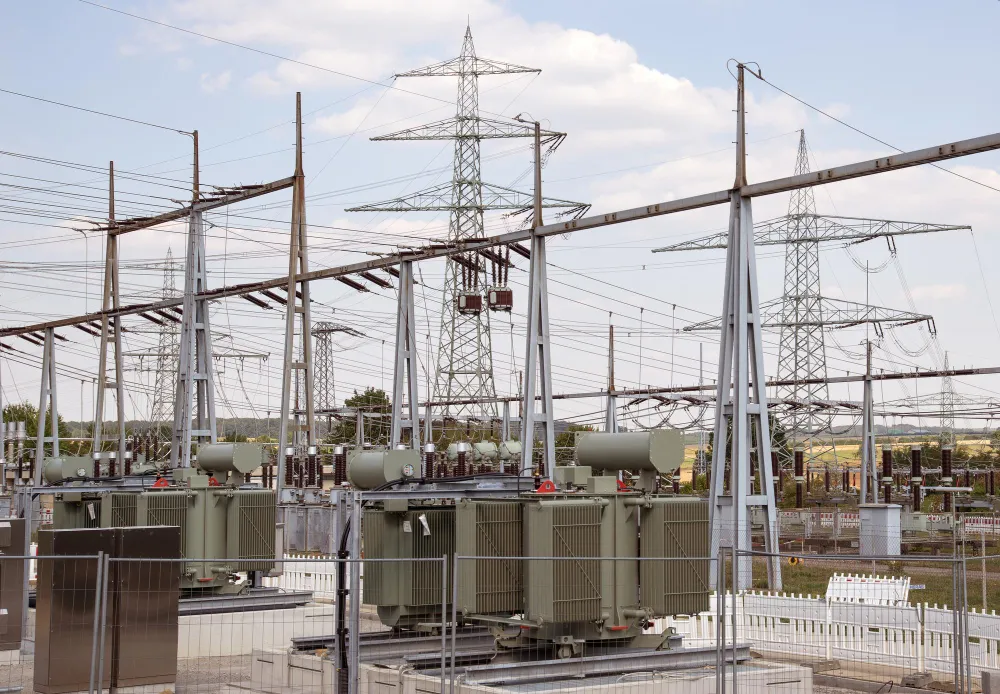
HS2D operates on the same physics-based explosion prevention principle as full TP architecture.
Operation is passive and independent of electronic detection systems.
HS2D addresses localized dynamic pressure before rupture can propagate to the main tank.
Dynamic Pressure-Driven Mechanical Activation
The HS2D operates on the same physics-based principle as complete structural protection systems:
- Activation triggered by dynamic pressure peak
- Mechanical high-speed opening
- Rapid pressure relief
- Reduction of localized overpressure buildup
Operation is passive and independent of electronic detection systems.
The objective is to prevent localized structural rupture that could propagate into larger failure events.
Modular Architecture
Core Activation Module
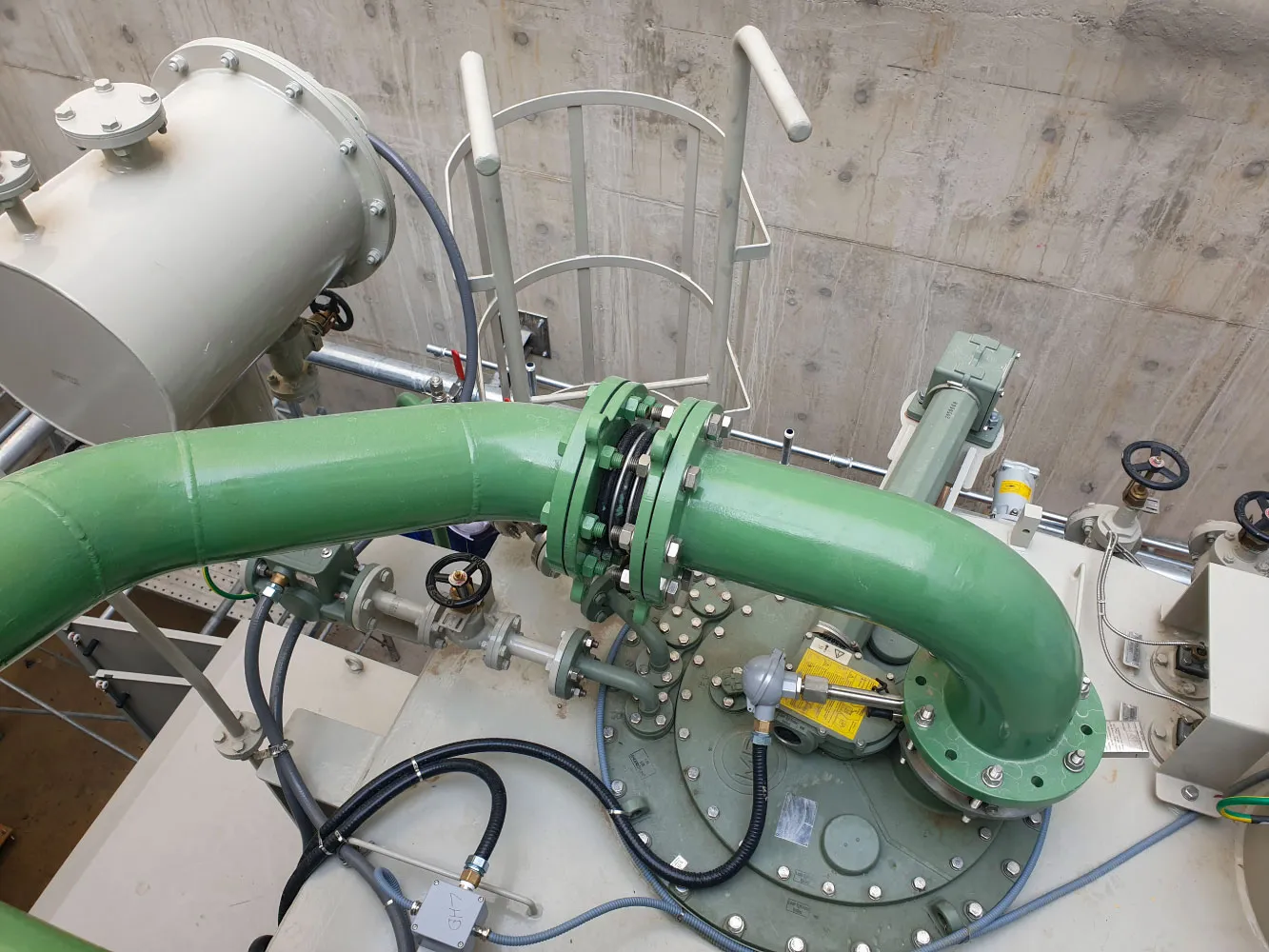
HS2D is built around a high-speed mechanical activation core designed to operate within the dynamic pressure window.
Configurable Integration Modules
Depending on transformer configuration and risk assessment, HS2D may include:
- Venting modules
- Pressure management components
- Auxiliary oil/gas routing elements
- Compartment-specific interface assemblies
This modular architecture allows engineering adaptation to project-specific requirements.
HS2D is not a one-size-fits-all device.
It is an engineered configuration.
HS2D configurations are engineered — not selected from a catalog.
Application Context
HS2D is typically applied when:
- Auxiliary volumes present structural exposure
- Complete system integration is not required
- Localized mitigation improves overall resilience
- Retrofit constraints limit full-system deployment
Engineering assessment determines the appropriate configuration.
Integration & Retrofit
HS2D integration includes:
- Compartment-specific engineering review
- Mechanical interface design
- Controlled installation
- Functional validation
Installation is structured to avoid interference with existing electrical protection schemes.
Engineered to align with:
- NFPA 850 fast depressurization principles
- IEEE internal arc research findings
- Utility insurability and MFL considerations
Engineering Validation
Deployment of HS2D is supported by:
- Pressure-time modelling
- Structural analysis of compartment volumes
- Full-scale internal arc validation frameworks
- Field deployment experience
- Validated through pressure-time performance testing aligned with internal arc scenarios
Engineering documentation can support project review when required.

Resilience Contribution
Properly engineered HS2D configurations:
- Reduce localized structural rupture risk
- Limit pressure propagation across volumes
- Improve asset survivability
- Enhance system-level resilience
HS2D may operate independently or complement main tank protection systems where required.
System Positioning
HS2D represents a modular structural mitigation architecture.
For comprehensive main tank structural protection, complete system configurations such as Transformer Protector may be considered based on engineering evaluation.
System selection depends on transformer design, site constraints, and resilience objectives.
Request Engineering Discussion
HS2D configuration depends on transformer compartment design and operational context.
Contact TPC to evaluate:
- Auxiliary volume exposure
- Integration feasibility
- Retrofit constraints
- Structural risk mitigation strategy