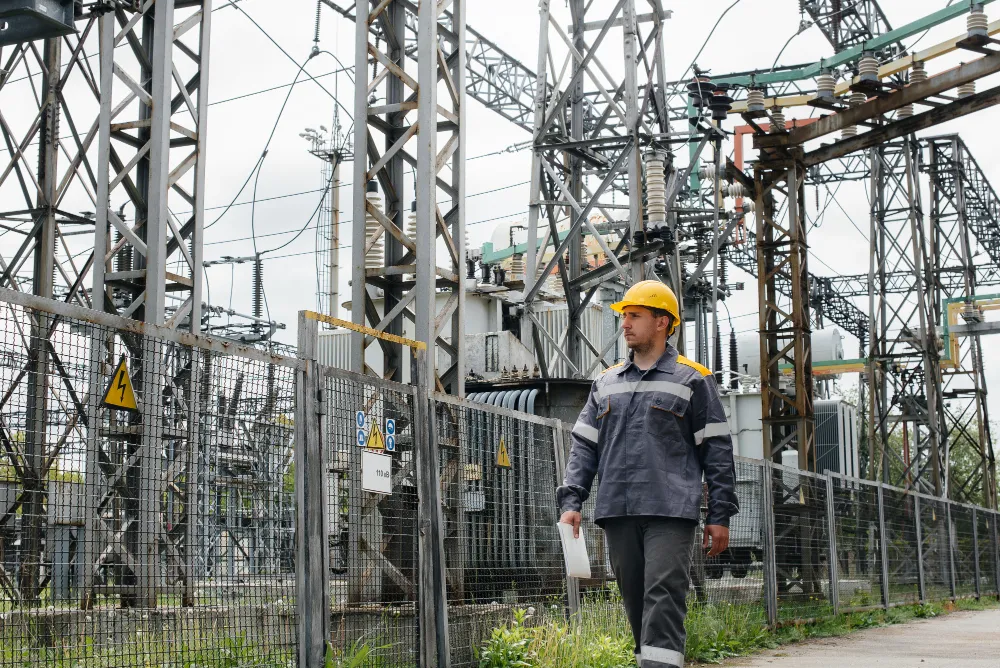

Mechanical transformer explosion prevention engineered, validated, and integrated under controlled field execution protocols
Engineering First
Controlled engineering integration ensures mechanical performance under real operating conditions.
Structural explosion prevention is achieved through engineering discipline — not component installation.
Structural survivability is engineered — not installed.
Effective transformer structural protection requires more than hardware deployment.
It demands:
- Dynamic pressure-time response validation
- Physics-based pressure analysis
- Transformer-specific mechanical interface design
- Controlled field integration
- Documented commissioning and validation
TPC delivers structural engineering integration — not hardware deployment.
Project-Specific Engineering
Each project is treated as a unique structural and operational system.
Engineering activities typically include:
- Transformer configuration review
- Pressure-risk assessment
- Mechanical interface modelling
- Auxiliary volume analysis (OLTC, bushings, connected oil systems)
- Site layout and spatial constraint evaluation
Integration solutions are engineered to align with:
- Existing protection architecture
- Operational constraints
- Outage planning requirements
- Applicable regulatory frameworks
No two installations are identical.
Engineering assessment determines structural response capability before integration
Full-Scale Validation & Pressure-Time Modeling Support
Validation bridges theoretical modeling and physical structural response.
Structural mitigation decisions are supported by:
- Full-scale internal arc testing data
- Pressure-time performance validation
- CFD and fluid–structure interaction (FSI) modelling
- Engineering documentation suitable for project records
Validation frameworks support structured engineering review when required by utilities, EPCs, or regulatory authorities.

Field Integration Discipline
Controlled deployment ensures structural performance is preserved under real operating conditions.
Controlled Deployment
Field integration is executed through structured procedures:
- Pre-installation engineering review
- Mechanical preparation and interface alignment
- System installation under controlled conditions
- Functional verification
- Commissioning documentation
The objective is to enhance resilience without disrupting electrical protection logic or operational workflows.

Outage Management Strategy
Engineering & field integration are planned to minimize operational disruption.
Typical considerations include:
- Outage window optimization
- Pre-fabricated interface components
- Installation sequencing strategy
- Coordination with site safety and operations teams
Resilience enhancement should not introduce operational instability.
Integration sequencing is engineered to maintain grid protection integrity.
Operational Continuity
Mechanical systems operate independently of software, sensors, or relay logic
Integrated structural protection systems:
- Operate passively
- Do not rely on electronics or software
- Do not require modifications to relay schemes
- Require limited routine mechanical inspection
Engineering integration is designed to preserve long-term operational simplicity.
Compliance & Documentation
Where required, TPC provides engineering documentation aligned with:
- NFPA risk-based engineering principles
- IEEE and IEC structural considerations
- Project-specific regulatory requirements
- Insurance risk documentation needs
Engineering integrity is supported by transparent technical records.
Engineering documentation supports structured technical review by utilities, EPCs, insurers, and regulatory authorities.

Engineering Governance
Structural resilience is not a product upgrade.
It is a governance decision supported by disciplined engineering execution.
Field integration must ensure that:
- Structural explosion prevention is not a product upgrade.
- Adjacent asset exposure is reduced
- Recovery remains technically feasible
- Redundancy remains usable
Engineering and deployment are inseparable components of resilience.
Engineering authority and controlled deployment are inseparable components of survivability

Request Engineering Discussion
Engineering authority and disciplined deployment are inseparable components of explosion prevention.
Integration feasibility depends on transformer configuration and site conditions.
Contact TPC to evaluate:
- Structural protection design
- Field deployment constraints
- Regulatory documentation alignment
- Project-specific integration strategy